

The world is packed with amazing places to visit, but how do you do it without it costing the earth, literally?
While everyone loves a holiday, more and more of us are recognising the impact of our travelling carbon footprint on the planet — and making efforts to reduce it. You certainly don’t have to stop travelling altogether, but making mindful choices about the way you travel can make a big difference.
Here are ten tips for being a more sustainable traveller.
1. Choose an eco-friendly hotel
Many accommodation providers are taking steps to reduce their carbon emissions or offset them entirely. For example, the Alto Hotel on Bourke in Melbourne achieved Earth Check Gold Certification as Carbon Neutral in 2016 (the first hotel to do so in Australia) and has undertaken numerous initiatives over the years to support that outcome. These include the fitting of double glazed windows, the use of electricity derived from 100% renewable sources, free recharging for electric or hybrid vehicles, an extensive onsite recycling programme, and the capture of rainwater for use in public toilets and for cleaning purposes. There’s even a rooftop beehive in operation!
You’ll no doubt want to research eco-friendly hotels online, and heading directly to a property’s website (rather than through an online travel agency) will give you more information on their green credentials. When searching for hotel accommodation, use an ad blocker to prevent intrusive ads from distracting you, improve page load speeds, and protect your personal information when make a booking.
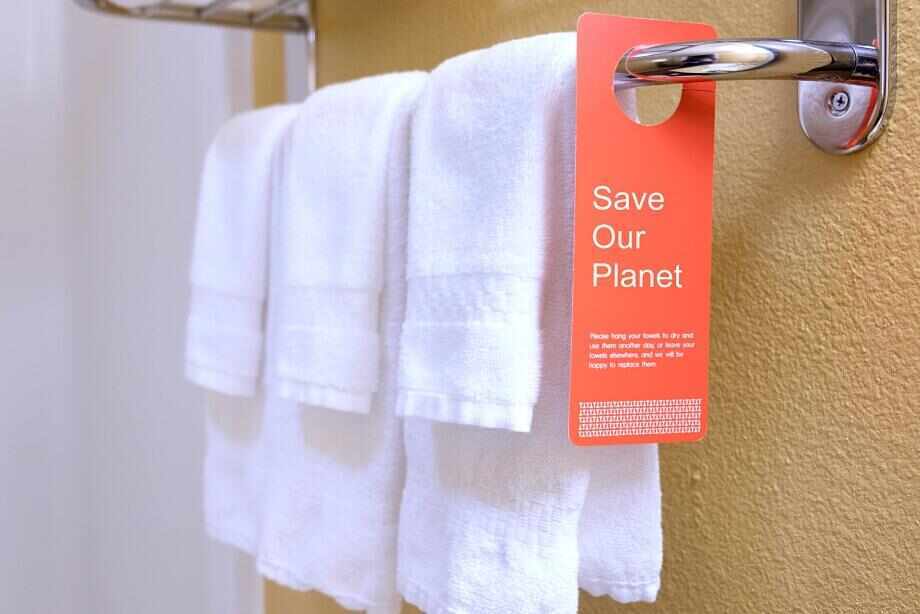
Wherever you choose to stay, it’s easy to do your bit to reduce hotel emissions. Bring your own refillable mini shampoo and conditioner containers, switch off lights and air conditioning when leaving your room, and request and re-use a single towel.
2. Go paperless
You’ve booked your flights, accommodation, tours and activities — but before you press ‘print’, consider whether you really need hard copies of the documents. Most travel providers are happy to accept e-versions of confirmations and boarding cards on your smart phone. Remember, this only works if your phone is charged — so don’t forget to pack that charger!

3. Pack light
There are some very good reasons to pack light; for starters, it minimises what you have to carry — but just as importantly, it reduces your carbon footprint. The less you take with you, the less energy is expended in transporting it around. So, cut your packing list back to the bare basics and make do with carry-on luggage only where possible.

4. Reduce your use of absentee power
Even though you won’t be there, in most cases your home appliances will still be consuming power if left on. That’s because everything from toasters to hot water systems are designed to sit in standby mode and be ready to deliver at a split second’s notice — even when they’re home alone for days on end. Refer to your appliances’ user manuals and switch everything off that can be done so safely. Make a point of checking whether your fridge has a holiday mode (many newer models do) and switch it over before you leave home.
5. Offset your flight emissions
If you’re travelling on a bus or coach, a gold star for you. They’re generally the form of transport with the lowest average emission of CO2 per person when moving between two points. Flights sit at the opposite end of the scale and are generally the biggest contributor to your carbon footprint (although travelling alone in a car is also right up there). Many airlines give you the option to offset your emissions for a few extra dollars, and if you can afford to do it — great. In the case of Qantas for example, 100% of the funds go towards Carbon Offset projects (which are detailed on their website) and the airline matches your contribution (in effect, doubling it). Alternatively, you can make use of one of the many Carbon Neutral Flight Calculators available online and go looking for a suitable offset project to donate to yourself.

6. Recycle your own onboard packaging
Airlines generate a huge amount of onboard rubbish and while some operate some form of recycling, it’s hit and miss. Consider taking responsibility for your own on-board waste; either pass on the cookie and plastic bottle of water completely, or take the packaging with you and ensure it finds its way into a recycling bin.
7. Bring a reusable water bottle and keep cup
Millions of disposable plastic water bottles are thrown away every year by travellers, so invest in a good quality reusable water bottle. It’s a simple but incredibly effective measure to make your adventures more sustainable. Australia’s tap water is perfectly fine to drink — but if you want extra peace of mind, boil it up overnight in your hotel kettle and top up your bottle on the way out each morning. A keep cup for your daily coffee is also an essential piece of eco-travel kit.

8. Opt for zero footprint sightseeing
Exploring your destination on foot is the cheapest and greenest way to get around. Most of Australia’s major cities offer an array of guided walking tours, which are generally low cost (and in some instances free!) and have next to no impact on the planet. In smaller cities and towns, check the tourism office’s website for a downloadable self-guided walking tour itinerary and follow it on your phone.
9. Make use of pedal power
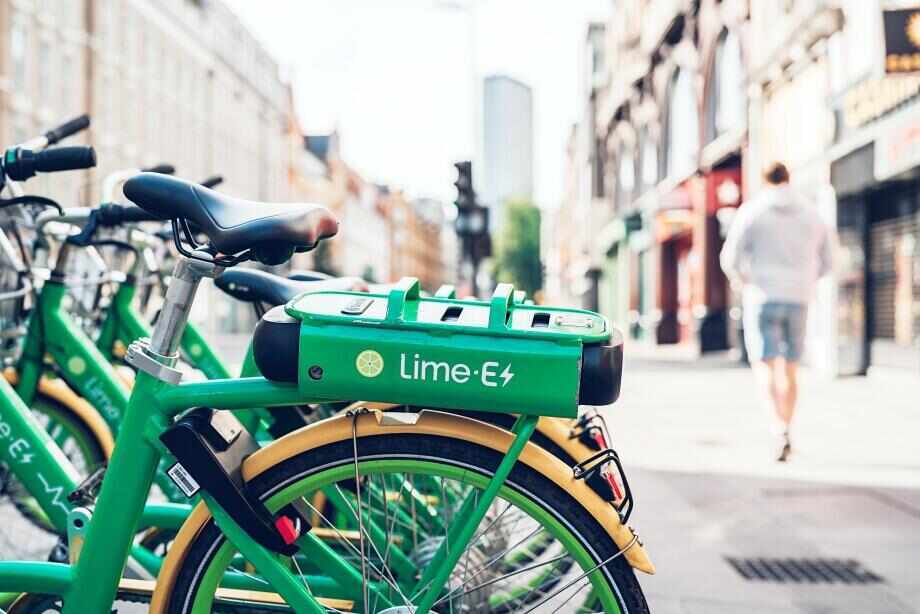
If you want to explore a bit further afield while keeping your carbon footprint in check, cycling is a great way to do it. And it doesn’t have to be hard yakka. E-bike hire schemes now operate in most major cities; simply download the booking app, set up an account, don a helmet, and away you go!
10. Shop local for souvenirs
Many of us love to take home a memento of our travels, but do you really want to purchase a souvenir that was actually made in an entirely different country and shipped in for sale to tourists? Not only does that make no sense (given you want a souvenir from the place you’re visiting!), but it’s far from sustainable. Instead, look for a local market or artist co-op that offers handmade goods, and purchase an item that was made by hand and with heart. It may cost you a bit more, but it will be worth every penny.
This post was published thanks to Nord VPN.
Do you have any tips for being a more sustainable traveller? We would love to hear from you. Join the conversation on our Facebook page.
Please note: It’s legal to use a VPN in most countries to protect your privacy on unsecured Wi-Fi networks, but check with the jurisdiction you’re travelling to beforehand just to be sure. Bypassing the geo-blocked boundaries of television or streaming services may contravene their terms of service, which we don’t recommend.
The information contained in this story is general in nature and does not constitute professional advice in any way. We make every effort to ensure this content is accurate, but we do not guarantee it. You should do your own research and seek the advice of professionals before acting or relying on any of the information provided in this story.
Additional images: Depositphotos, Bigstock, and Envato

About the writer
Adam Ford is editor of Top Oz Tours & Travel Ideas, and a travel TV presenter, writer, blogger, and photographer. He has travelled extensively through Europe, Asia, North America, Africa, and the Middle East. Adam worked as a travel consultant for a number of years with Flight Centre before taking up the opportunity to travel the world himself as host of the TV series Tour the World on Network Ten. He loves to experience everything a new destination has to offer and is equally at home in a five-star Palazzo in Pisa or a home-stay in Hanoi.
Travel essentials
You can book many aspects of your holiday on the Top Oz Tours & Travel Ideas website, including flights, hotels, car hire, travel insurance, and more. When you purchase a product or service using the following links from our partners, we receive a small commission. It does not affect the price you pay, and it enables us to continue to provide readers with amazing travel inspiration.
Flights
Compare airlines, flights, and fares in one place with Booking.com. They don’t charge any credit card fees and you can always see exactly what you’re paying for in the price breakdown. You can book one-way, round-trip, and multi-city flights, and change your travel dates with ease when you opt for a flexible ticket option (an additional cost applies). It all adds up to a great flight! Search for flights with Booking.com
Hotels
If you’re looking for a great deal on your next hotel or homestay, look no further than Booking.com. Their mission is to make travel affordable and accessible to more people, and to deliver seamless accommodation experiences that complement your holiday. Search for hotels and homestays with Booking.com
Car hire
Discover Cars is an award-winning (World Travel Awards) car rental comparison website, which helps customers find, compare, and hire cars at the most competitive prices globally. Search for hire cars with Discover Cars
Day tours & experiences
Search and book day tours, guided experiences, and attraction tickets and passes worldwide with Top Oz Tours and Viator. There are no booking or credit card fees when you book through us, and you’ll have access to the widest choice of activities and most competitive prices. Browse day tours and experiences
Multi-day tours & trips
Top Oz Tours has joined forced with Tour Radar to bring you a fabulous range of multi-day tours and trips from the world’s leading operators. Travel with like minded people and get the best possible price on the holiday of your dreams. Browse multi-day tours and trips
Travel insurance
World Nomads aims to be a part of every traveller’s journey by providing a reassuring range of travel insurance services. Benefits include coverage for emergency medical and evacuation or repatriation, lost baggage, trip cancellation, and more than 150 adventure activities. Get an insurance costing