Top Oz Tours offers a great range of Croatia tours and experiences. You can browse the options here.
Our bus ride from Mostar to Dubrovnik — known locally as the ‘Pearl of Adriatic’ — takes around four hours.
Bosnia and Herzegovina’s lush, mountainous countryside gradually gives way to the glistening beauty of the Dalmatia coastline in Croatia. Those lucky enough to have snared a seat on the righthand side of the bus ‘ooh’ and ‘aah’ at the tranquil bays and craggy bluffs that define the route to our much anticipated destination.
Dubrovnik or King’s Landing? This centuries-old city has found new fame thanks to the television series Game of Thrones. I’m naive to this phenomenon (having never watched a single episode), but my travelling companion is obsessed with spotting locations. I’m determined to abandon the script altogether as we check into our accommodation and set off to explore.
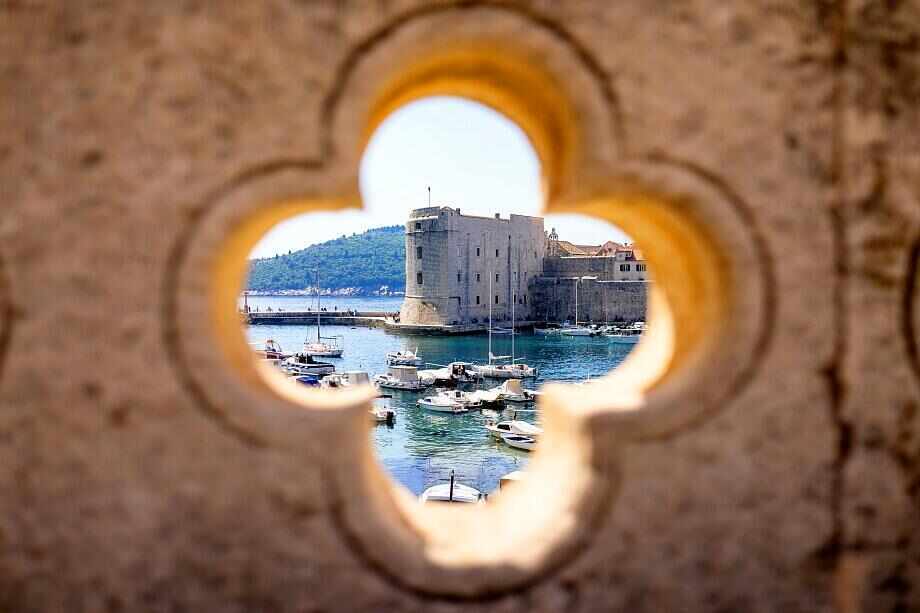
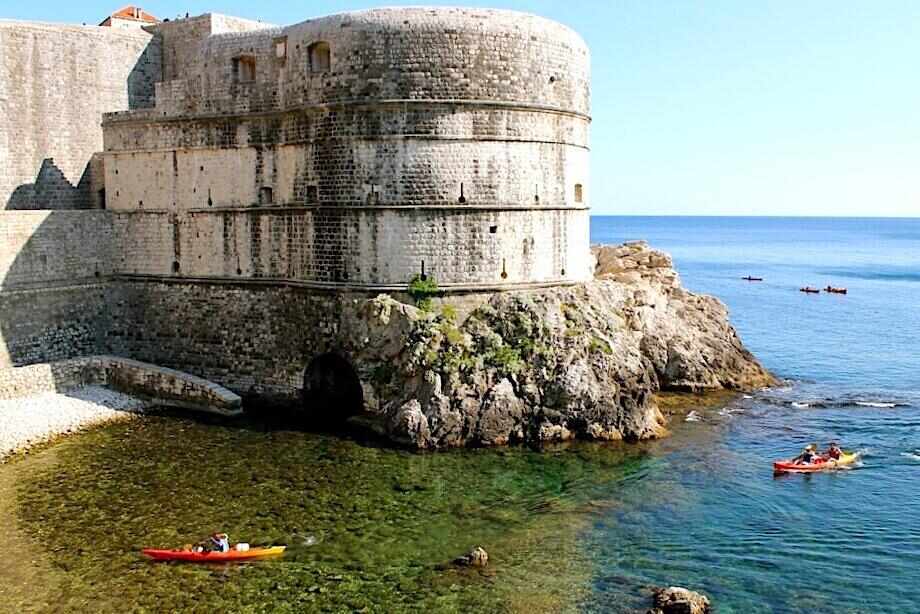
We’re here in the peak of summer and Europeans love to holiday in coastal locations like this one. The streets of the old city are crowded and the heat is beaming off the cobblestone pavements. The glistening waters of the Adriatic Sea look way too inviting, so we decide to escape the ‘Thrones throng’ by booking a kayak tour and paddling around the old city walls to nearby Lokrum Island. The half-day tour starts beneath Fort Lovrjenac in Dubrovnik’s small port of Pile.
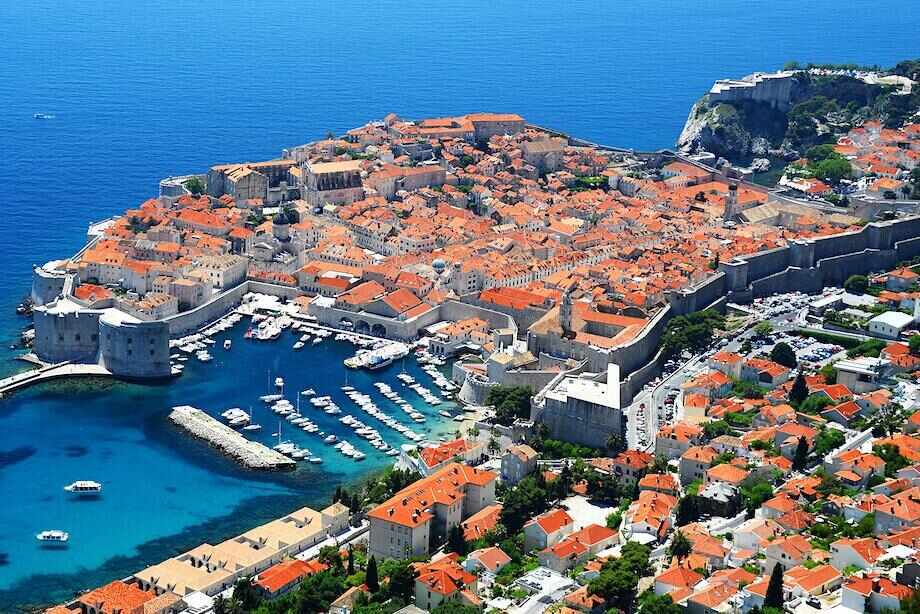
Situated a mere 600 metres from Dubrovnik and spanning an area of just two hectares, Lokrum Island has a long history. A Benedictine abbey and monastery was founded here in 1023 and operated for close to 800 years. In 1808 the last Benedictines vacated the island and the legend happily relayed to us by our tour guide is that on their final night, the monks put a curse on anyone who should try to settle on the island in the future.
Coming ashore, we’re surprised to encounter prancing peacocks — a legacy of Austrian archduke and Emperor of Mexico, Maximilian, who had a holiday home here in the mid 1800s. He was executed in Mexico a few years later; perhaps the story of the curse has some merit.
Situated on the eastern side of the island, the Lokrum Botanical Garden was founded by the Croatian Academy of Sciences and Arts in 1959. Although my horticultural knowledge is limited, I’m surprised to see many Australian native plants growing here. Our guide tells us that most of this vegetation was sourced from Australia and South America to establish whether tropical and sub tropical plants could adapt to this climate.
Next we head for the ruins of the Benedictine abbey and monastery — for those with a keen eye and an obsession for Game of Thrones — the ancient port-city of Quarth. My companion is up for staging a re-enactment, but thankfully our guide has other ideas. He leads us to a secluded beach bar, where people are lounging around, reading books and sipping cool drinks. We have time to take a refreshing dip and order a beverage.
Returning to the kayaks, our exploration of the Adriatic waters gets back underway. Imagine my surprise when we encounter a nudist beach beneath a cliff on the south-eastern side of the island! The passing tour boats and kayaks are clearly of no concern to these sun worshipping naturists! We paddle our kayaks into the Purple Cave (which derives its name from the purple-coloured seaweed that covers the rocks), before setting a homeward course to the port.
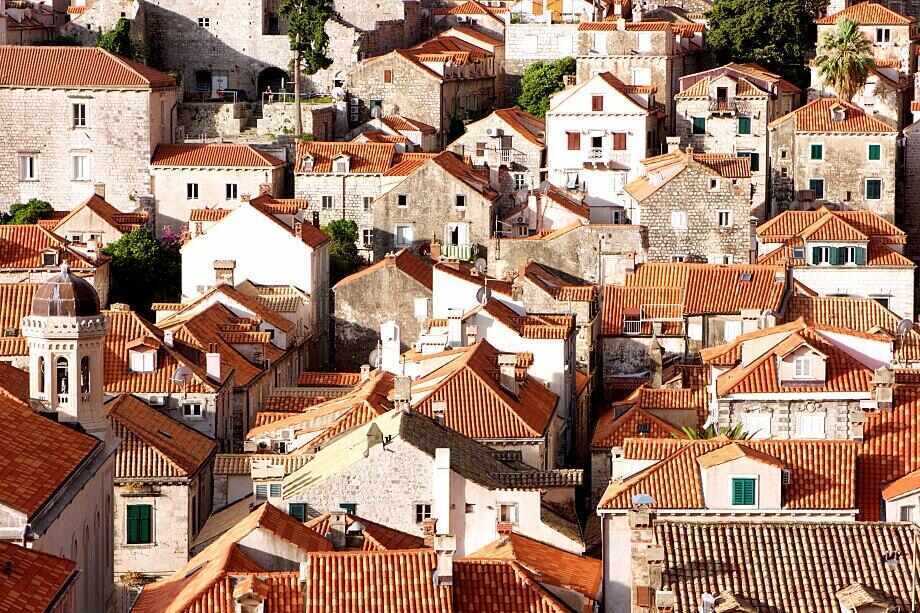
After a relaxing morning on the water, it’s time to head for the hills that rise high behind the city. There are two options to get to the top of majestic Mount Srd (pronounced ‘surge’): walk (which takes around an hour), or glide up with ease on the cable car. We opt for the latter. In less than four minutes our ears pop and we step out at 412 metres above sea level. I’m instantly mesmerised by the sweeping view across the terracotta roofs of the city, towards the old medieval wall, and beyond to the Adriatic Sea.
We spend some time exploring the mountaintop’s Fort Imperial, which was built by the French during the Napoleonic Wars of the early 1800s to hold back any attacks by Austrian forces. Fascinatingly, the fort didn’t see combat until 1991, when it played a key role in the city’s defence during the Croatian War of Independence against Serb-controlled forces. A small museum provides insight into the destruction wreaked by the nine-month Siege of Dubrovnik.
With that new knowledge in place, we head for the terrace at nearby Panorama Restaurant to sit and appreciate the city that stands today, sip a cocktail, and watch the setting sun.
For more travel inspiration, visit www.visitdubrovnik.hr.
Browse our range of Croatia tours and experiences here.
Do you have a traveller’s tale to share? Please contact us.
Do you have any tips for top things to do in Dubrovnik? Leave a comment below.
Additional images: Bigstock

About the writer
Vanessa O’Hanlon is an Australian television news and weather presenter, and an avid traveller. Her travels began with a flight to Egypt, a visit to the pyramids and a camel ride, and she knew there was no turning back. Since then, Vanessa’s backpack has seen a thing or two — from exploring relatively untouched Bhutan to braving the cold on the peaks of Mount Kilimanjaro.