
Top Oz Tours offers a great range of Chiang Mai tours and experiences. You can browse the options here.
Chiang Mai’s mountainous surroundings offer epic trekking opportunities.
The national parks of Doi Suthep, Mae Taeng, Huai Nam Dang, and Doi Inthanon are all within relatively easy reach of Thailand’s second largest city, and offer some of the most amazing hiking in the entire country. And with such a diversity of landscapes to choose from, it won’t be difficult to find trails that appeal to you and suit your level of fitness.
All of that said, be mindful of the weather when planning your trip. The dry season runs from mid-October to the end of March and is the optimal time for trekking in Thailand’s north. The weather is relatively cool and dry, and humidity is low. At other times of the year you may struggle with the heat.
Here’s a checklist of some of the top places to trek in Chiang Mai.
Browse Chiang Mai tours and experiences
1. Doi Inthanon
Located 1.5 hours’ drive south-west of Chiang Mai through terraced rice fields and small villages, Doi Inthanon National Park is home to the highest mountain peak in Thailand (2,500+ metres) and is famous for its many waterfalls (pull over en route to check out the majestic Wachirathan Falls). The park is also rich in biodiversity and home to abundant wildlife. You may see Chinese flying squirrels, macaques, barking deer, and even Asiatic black bears.
Doi Inthanon offers a good network of hiking options and is hugely popular with both Thais and foreign backpackers. You can stay at the Doi Inthanon Campground in Ban Luang village, which has well maintained amenities and hires out all the gear you’ll need (so don’t go to the expense of purchasing it).

The Kew Mae Pan Nature Trail is possibly the region’s most popular hike and offers mind-blowing mountains views. However, it’s compulsory to do the three-kilometre walk with a hill tribe guide (you’ll be assigned one at the trailhead). The walk takes around two hours to do, and there are several information stations along the way.
You should also take this opportunity to visit the Royal Twin Pagodas of Doi Inthanon, which were constructed to commemorate the 60th birthdays of the late King Bhumibol Adulyadej and Queen Sirikit (now the Queen Mother). More epic views await you!

2. Mae Taeng
Mae Taeng is a mountainous region just 35 kilometres to the north of Chiang Mai, and is fast gaining popularity as an adventure travel destination. Ziplining is one of the most popular activities on offer here, alongside rafting, kayaking, and of course trekking. Love them or loathe them, there are also two elephant attractions based here.
One of Thailand’s ten largest national parks — Sri Lanna — lies on the eastern side of the Mae Taeng District, and encompasses lush forest, modest mountain peaks, caves, and the sprawling Mae Ngat Somboon Chon Dam. Enjoy some time on the water by taking a longtail boat out to the floating Restaurant on the Water.

Because of its close proximity to Chiang Mai, Mae Taeng makes a relatively easy day trip. However, if you do want to stay overnight, several hill tribes in the area offer homestays.
3. Huai Nam Dang
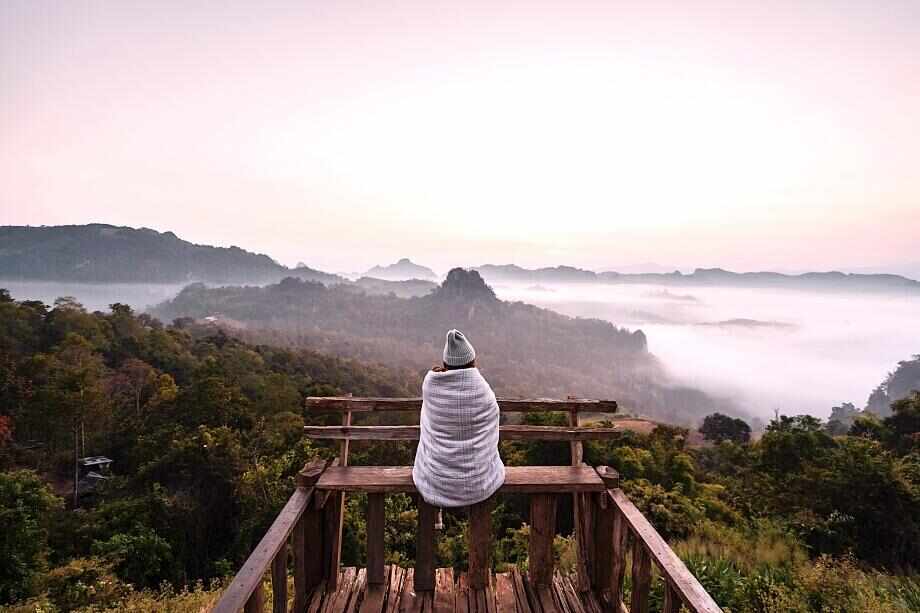
North-east of Mae Taeng and close to the Pai District in Mae Hong Son, Huai Nam Dang National Park is a mountainous region that’s well known for the ‘sea of mist ‘ phenomenon — where valleys fill with clouds at sunrise, and you can look down on the cloud mass from an elevated viewpoint. Doi Kew Lom is one of the most popular vantage points to try and ‘see a sea’.
Huai Nam Dang is home to a variety of waterfalls, but they take some effort to get to. Gorgeous Mae Yen Waterfall is located east of Pai and will take you about two hours to reach on foot. The trailhead is roughly 10 minutes’ drive east of the town. This walk is relatively flat for most of the way, apart from a climb towards the end.
You can also hike to Huai Nam Dang Waterfall, which has a fall of around 50 metres and is surrounded by thick vegetation. This trek will also take around two hours each way and is well worth the effort. If you get there early, it’s highly likely you’ll have the place to yourself. There are some river crossings involved, so bring your swimmers, sandals, and a towel. The trailhead is located a short-distance north-east of Pai. Get some local advice on the trek before setting out.
If you’re travelling back towards Chiang Mai, consider breaking the trip with a soak at the Pong Duat Hot Spring.
4. Doi Suthep-Pui
Doi Suthep-Pui National Park literally sits on Chiang Mai’s doorstep. It’s a distance of just 20 kilometres from the city to the heart of the park, but the narrow winding roads blow the trip out to about 40 minutes by scooter or vehicle. Doi Suthep-Pui is home to the must-visit mountainside Wat Phra That Doi Suthep Buddhist temple, along with waterfalls, lookouts, and endless hiking trails. As in Doi Inthanon, you’ll spot plenty of wildlife here (including more than three hundred species of bird).

Hiking in Doi Suthep-Pui offers plenty of variety, but always seek local guidance before setting out and let someone know about your plans (yes, you’re relatively close to the city, but it’s still surprisingly easy to get lost here). One of the most popular walks is the Monk’s Trail, which starts in the city near Chiang Mai University and ends at Wat Phra That Doi Suthep. It will take you around two hours to do.
If you’re up for a relaxed amble to a waterfall, the three-kilometre return walk to Mae Sa is a lovely option. Alternatively, the Montha Than Waterfall trail is one kilometre in length and can be completed in less than 30 minutes.
5. Mae Wang
Mae Wang National Park is situated south of Chiang Mai and is probably most famous for its photogenic Pha Chor cliffs (which look a bit like the ruins of an ancient temple). The Mae Wang River runs long the park’s northern border, and here you have the opportunity to give your feet a break and try bamboo rafting. So, climb on board one of these intriguing vessels!

Traditionally, bamboo rafts were used to transport goods along northern Thailand’s network of rivers and streams. A raft generally consists of eight or nine bamboo rods, secured together and navigated by a boatman with a long bamboo pole.
Bamboo rafting trips from Chiang Mai are a lot of fun, and generally include hotel pick-up/drop-off and lunch. Each raft can carry between six and eight people, and you’ll spend an hour or so drifting through the jungle. It’s a tranquil way to travel!
This post was published thanks to Bon Voyage Thailand.
Browse our range of Chiang Mai tours and experiences here.
Do you have any suggestions to add to our list of the top places to trek in Chiang Mai? We would love to hear from you. Join the conversation on our Facebook page.
The information contained in this story is general in nature and does not constitute professional advice in any way. We make every effort to ensure this content is accurate, but we do not guarantee it. You should do your own research and seek the advice of professionals before acting or relying on any of the information provided in this story.
Additional images: Envato

About the writer
Adam Ford is editor of Top Oz Tours & Travel Ideas, and a travel TV presenter, writer, blogger, and photographer. He has travelled extensively through Europe, Asia, North America, Africa, and the Middle East. Adam worked as a travel consultant for a number of years with Flight Centre before taking up the opportunity to travel the world himself as host of the TV series Tour the World on Network Ten. He loves to experience everything a new destination has to offer and is equally at home in a five-star Palazzo in Pisa or a home-stay in Hanoi.
Travel essentials
You can book many aspects of your holiday on the Top Oz Tours & Travel Ideas website, including flights, hotels, car hire, travel insurance, and more. When you purchase a product or service using the following links from our partners, we receive a small commission. It does not affect the price you pay, and it enables us to continue to provide readers with amazing travel inspiration.
Flights
Compare airlines, flights, and fares in one place with Booking.com. They don’t charge any credit card fees and you can always see exactly what you’re paying for in the price breakdown. You can book one-way, round-trip, and multi-city flights, and change your travel dates with ease when you opt for a flexible ticket option (an additional cost applies). It all adds up to a great flight! Search for flights with Booking.com
Hotels
If you’re looking for a great deal on your next hotel or homestay, look no further than Booking.com. Their mission is to make travel affordable and accessible to more people, and to deliver seamless accommodation experiences that complement your holiday. Search for hotels and homestays with Booking.com
Car hire
Discover Cars is an award-winning (World Travel Awards) car rental comparison website, which helps customers find, compare, and hire cars at the most competitive prices globally. Search for hire cars with Discover Cars
Day tours & experiences
Search and book day tours, guided experiences, and attraction tickets and passes worldwide with Top Oz Tours and Viator. There are no booking or credit card fees when you book through us, and you’ll have access to the widest choice of activities and most competitive prices. Browse day tours and experiences
Multi-day tours & trips
Top Oz Tours has joined forced with Tour Radar to bring you a fabulous range of multi-day tours and trips from the world’s leading operators. Travel with like minded people and get the best possible price on the holiday of your dreams. Browse multi-day tours and trips
Travel insurance
World Nomads aims to be a part of every traveller’s journey by providing a reassuring range of travel insurance services. Benefits include coverage for emergency medical and evacuation or repatriation, lost baggage, trip cancellation, and more than 150 adventure activities. Get an insurance costing